
At the driving range, the $199.99 Shot Scope LM1 can make a compelling case: it shows the number you came for without making you unlock a phone. Move the same practice into a garage and the equation changes. The cheaper unit needs more ball flight in front of the mat. Measure that space first.
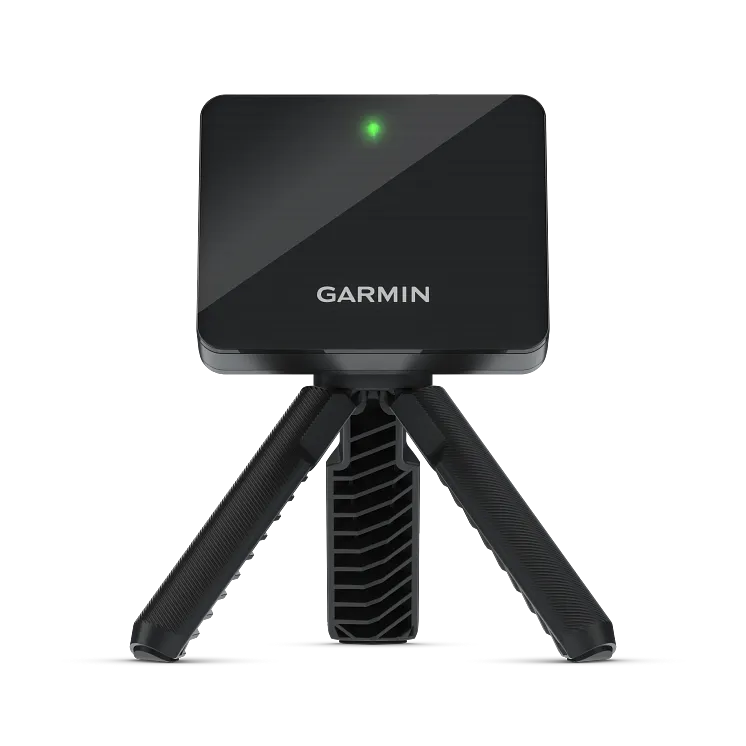
Garmin R10 vs. Shot Scope LM1: the differences that matter
| What to compare | Garmin Approach R10 | Shot Scope LM1 |
|---|---|---|
| Price reference | $499.99 | $199.99 |
| Behind the ball | 6–8 ft | 4–5 ft |
| Ball to net indoors | At least 8 ft; Garmin separately specifies a room at least 15 ft long | At least 12 ft of ball flight in Shot Scope’s net setup guidance |
| Readout | Garmin Golf app on a compatible phone; more launch and shot detail | Built-in display with ball speed, club speed, carry, total distance and smash factor |
| Subscription | Basic practice doesn’t require one; Garmin Home Tee Hero course play does | No membership required for the basic readings; choose another system for virtual golf |
U.S. retailer price references. Prices are examples before tax and delivery, not promises about Amazon or any other retailer. A lower sale price does not change the space a radar needs.
The shorter garage test: draw three lines on the floor
Mark the front of the net, the ball and the back edge of the proposed device position. Measure the two gaps separately. The LM1 sits closer behind the ball, but that doesn’t make it the shorter indoor setup. Add its 4–5 ft of rear placement to its 12 ft of required flight and you get 16–17 ft from device to net; the R10’s placement arithmetic comes to 14–16 ft with 8 ft of flight. Neither sum is a room or safety clearance. The net needs its own back clearance, and so do the golfer’s swing and any likely miss.
Worked example: If your tee is 9 ft from the net and you have 7 ft behind the ball, the R10’s placement numbers fit that sketch, while the LM1 misses its flight requirement. That still doesn’t tell you whether an actual driver swing clears the ceiling or whether the net contains a miss. If you cannot verify containment and swing clearance, use a range or a purpose-built bay.
Garmin indoor placement · Shot Scope placement specifications · Shot Scope net setup.
What does the extra money actually buy?
Give the LM1 the job it was built for: hit a set of shots with one iron, check the carry numbers for the solid strikes, then compare the same routine with the next club. Into a net, neither device sees the ball land. The number is an estimate of carry, not a measured landing point.
Pay for the R10 if you’ll use the app to look beyond speed and distance, or if you want the option of virtual course play. Don’t buy it simply because it has more numbers. Pick two measurements that could change your practice: launch and carry for a gapping session, for example. And budget for Garmin Golf membership if you want Home Tee Hero. A net, mat, protection and any software you’ll actually use count toward the total, too.
Our call: LM1 for no-phone range practice; R10 for a verified indoor setup where app feedback or simulation matters. If your only goal is to get two usable wedge carry numbers, spend the difference on practice time instead.
Independent reporting. We may earn a commission from links on this page. As an Amazon Associate I earn from qualifying purchases.
Check current prices
See the exact retail models below. Confirm the listing and price before buying.
Related equipment guides
Best launch monitors under $500 · Garmin R10 vs. Rapsodo MLM2PRO · Check your garage layout